Claude Code gets a fresh session for each ticket when Matt Pocock splits a bigger change out of the planning conversation. In a NetworkChuck interview on November 20, 2026, he said he starts watching his context around 150,000 tokens. The exercise below turns one order rule into a ticket that survives a fresh session. You can then try it at medium and high against the same five cases. You'll need Git, Node.js and a Claude Code installation with access to Opus 5.5. Original interview, 25:21 · Claude Code model configuration
1. Check the model and the effort you're actually using
Open /model and choose Opus 5.5. Claude Code supports it from v2.1.280. The model normally defaults to medium, although settings higher in the configuration order can override that. Run these inside Claude Code. Model configuration and precedence
/effort medium
/effort status
/context all
Check the applied effort in the status output and the loaded files and instructions in the context view. Setting a level by name can save it for that model in later sessions. Keep the starting level in your notes if you normally use a different one. Interactive mode · Context management guidance
Pocock's 150,000-token mark is when he starts asking whether the conversation is carrying more history than the next task needs. Opus 5.5 can hold up to 1 million tokens. A small change still fits the planning conversation if its requirements are settled and its test is within reach. Bigger work gets a spec and tickets he can hand to fresh sessions. Pocock's decision at 26:34
2. Put the decision and its five cases on disk
Create an empty folder named cancel-medium. The example is an order service with one disputed rule. Once the team has packed an order, the order can no longer be cancelled through this function. Settling that detail during the interview saves the implementation agent from inferring policy from one ambiguous status name.
Pocock's /grill-with-docs skill records agreed vocabulary in GLOSSARY.md. Many decisions can still live only in the thread, so AI Hero's own documentation says to carry those into /to-spec while the conversation is available. For this exercise, the written ticket is enough. The grilling skill · The spec skill
Save this deliberately faulty implementation as order.mjs.
export function canCancelOrder(status) {
  return status !== "shipped";
}
Save the cases as order.test.mjs.
import assert from "node:assert/strict";
import test from "node:test";
import { canCancelOrder } from "./order.mjs";

const cases = [
  ["pending", true],
  ["packed", false],
  ["shipped", false],
  ["cancelled", false],
  ["unknown", false]
];

for (const [status, expected] of cases) {
  test(status, () => assert.equal(canCancelOrder(status), expected));
}
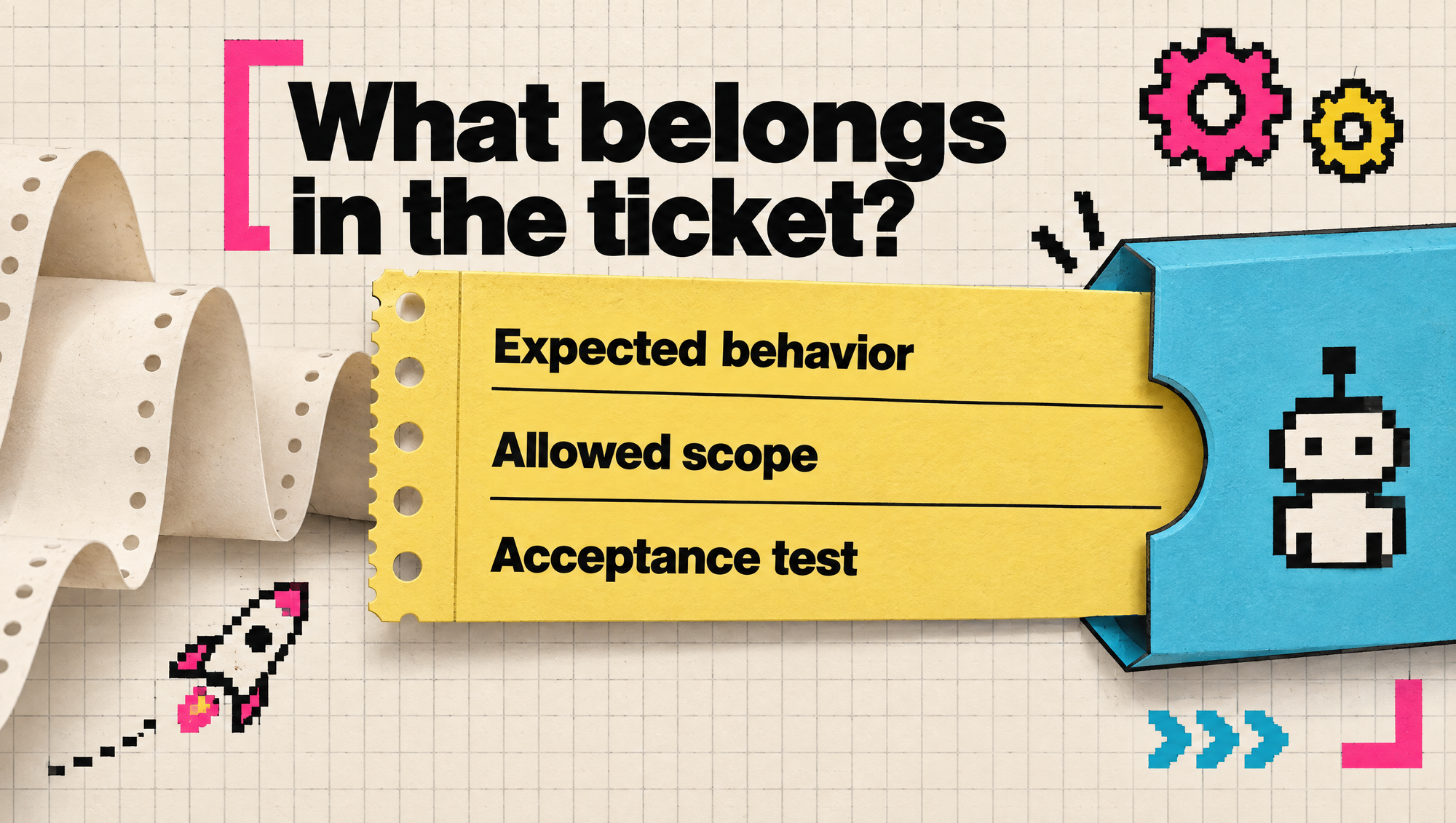
Save the handoff below as TICKET.md.
Allow cancellation only while an order is pending.
A packed, shipped, cancelled, or unknown status must return false.
Change only order.mjs. Leave tests unchanged.
Run node --test order.test.mjs. Expect five passing cases.
Show the file you changed and the test result. Do not commit.
Run the test from the folder before you hand it over. Two cases should pass and three should fail. In particular, the passing shipped case protects behavior that already works.
node --test order.test.mjs
3. Start implementation in a fresh session
From the order fixture in cancel-medium, record a clean Git baseline and make a second copy at cancel-high. Both folders should begin at the same commit.
git init
git add order.mjs order.test.mjs TICKET.md
git -c user.name=Tutorial -c user.email=tutorial@example.com -c commit.gpgsign=false commit -m "Baseline"
git clone . ../cancel-high
Start a new Claude Code session in cancel-medium, or run /clear once the ticket is saved if Claude Code is already open there. Choose Opus 5.5 at medium. Give it one instruction: “Read TICKET.md, implement the ticket and verify it.” That makes the ticket, repository and tests available without carrying the full planning conversation into the implementation. Anthropic's context management guidance · Pocock's handoff, 27:24
Before accepting the change, run these commands yourself. The local fixture passed all five cases when we changed the return condition to status === "pending". We applied that one-line fix by hand to verify the fixture and its acceptance test.
git status --short
git diff --name-only
node --test order.test.mjs
The file list should show only order.mjs. A five-case pass counts only if the test file stayed as it was. If the ticket omitted the definition of packed, fix the ticket before the next run.
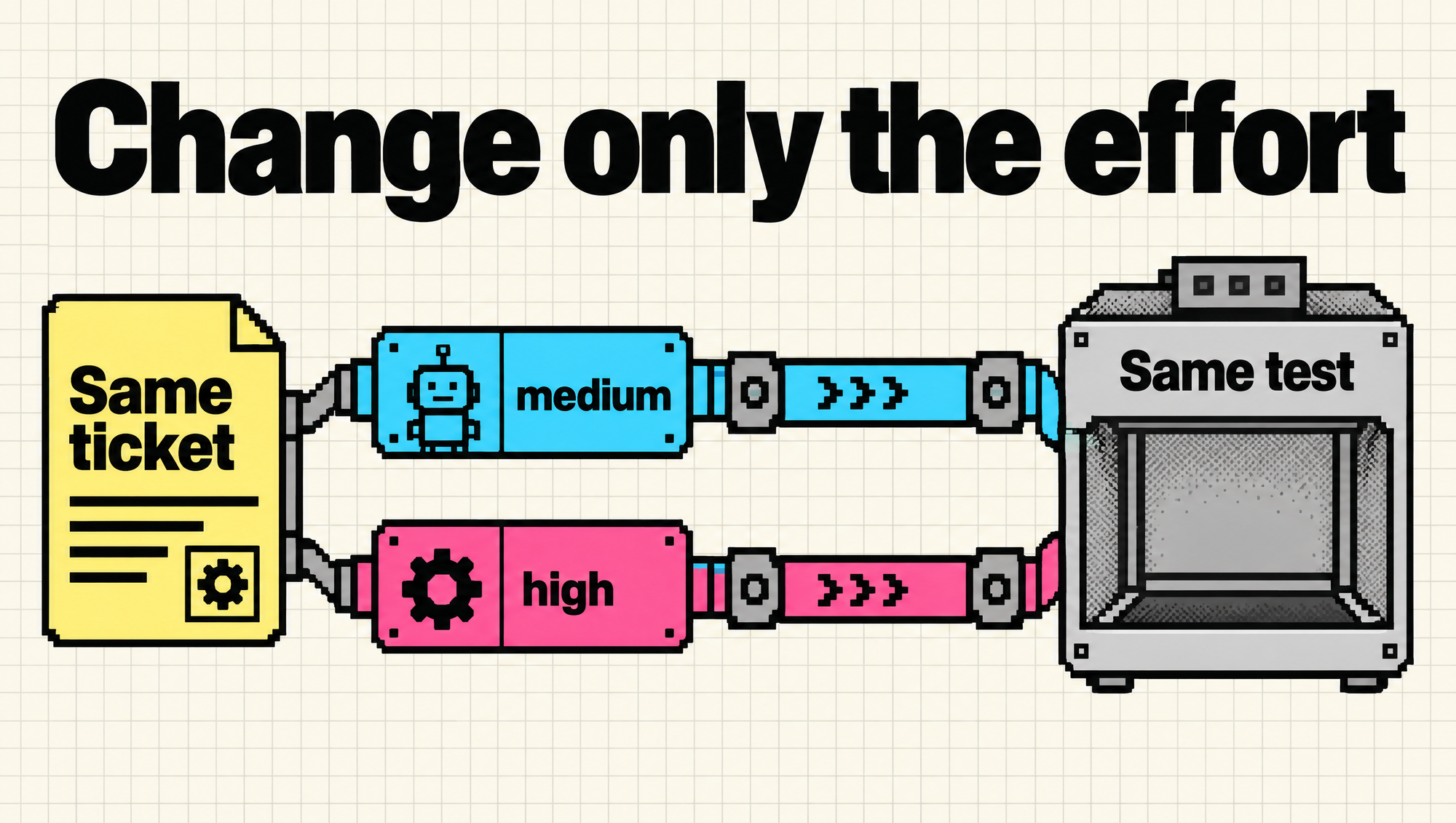
4. Change just the effort for the second run
Open a fresh Opus 5.5 session in cancel-high. Keep the tools and permissions from the medium run. Set /effort high, check it with /effort status, and send the same instruction. Run the same three verification commands. Write down the number of passing cases, any off-scope files, elapsed time and token use if your setup exposes it. Anthropic's guidance on calibrating effort
If each run passes all five cases and touches the same single file, time and usage can settle which setting to use for this kind of ticket. On a harder task, define what would count as an improvement before running the comparison. Pocock says he usually works at medium but considers more effort for performance testing or debugging that requires several attempts. A useful second fixture would give both runs the same failing test and leave several reasonable causes to check. Interview on effort, 30:00 · When Pocock turns it up, 32:02
Frequently asked questions
When should I use /clear instead of /compact in Claude Code?
Use /clear to start a fresh session once the next ticket can stand alone. Claude Code keeps the earlier conversation available to resume. Use /compact when you're continuing the same task and need a summary. Give it a focus, such as /compact keep the state rules and the test command, and save critical decisions to a file first. Claude Code best practices
Is 150,000 tokens a limit for Opus 5.5?
Pocock uses 150,000 tokens as a cue to review what his session is carrying. Opus 5.5's context capacity is 1 million tokens. When the agent keeps revisiting a settled decision or confuses two tickets, check what the next session actually needs and write it down before starting over. Original interview, 26:34–27:24 · Model configuration
Sources
About the author
Crafting seamless user experiences with a passion for headless CMS, Vercel deployments, and Cloudflare optimization. I'm a Full Stack Developer with expertise in building modern web applications that are blazing fast, secure, and scalable. Let's connect and discuss how I can help you elevate your next project!
Comments
Join the discussionNo comments yet. Be the first to comment.