Vibe Coding: It's Not a Faster Way to Write. It's a New Way to Think.
What Is Vibe Coding?
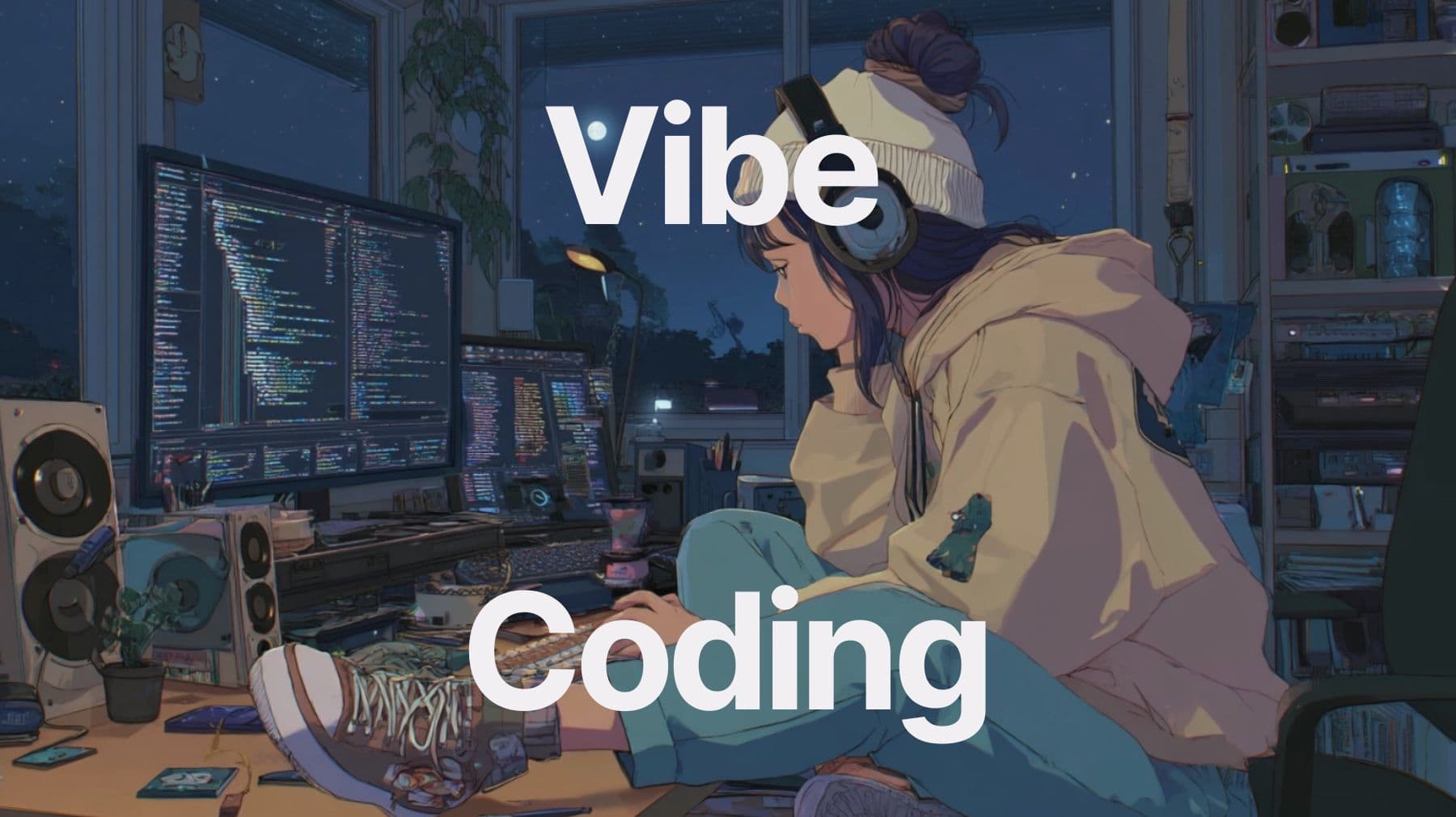
Vibe Coding is a new AI-driven software-development approach coined by Andrej Karpathy in February 2025. Rather than writing every line of code manually, the developer “gives in to the vibes”—providing high-level, natural-language prompts (even by voice) to a large language model (LLM) tuned for coding. The LLM then generates working source code; the human’s role shifts to guiding, testing, and refining the AI-produced output.
Key characteristics:
Natural-language instructions instead of syntax: e.g., “Make the sidebar padding half as big.”
Minimal keyboard use: voice tools like SuperWhisper feed prompts directly to AI.
One-click acceptance: developers often accept AI diffs wholesale, prioritizing flow over code structure.
On-the-fly bug fixes: error messages are pasted back to AI for instant correction.
“Vibe first, code later” mindset: understanding every line is optional—functionality matters most.
Origins and Rationale
Karpathy, ex-OpenAI cofounder and Tesla AI lead, introduced vibe coding to capture the explosion in LLM coding capabilities. He argued that “the hottest new programming language is English” and that when LLMs become “too good,” code itself can fade from the developer’s mind. The method shines for weekend prototypes and “throwaway” projects—fast, fun, and highly experimental.
Core Benefits
| Benefit | Impact |
| Rapid prototyping | Ideas → functioning software in hours instead of days |
| Lowered technical barrier | Non-programmers can build simple apps by describing what they want |
| Creativity unlocked | Focus on design and logic rather than boilerplate code |
| Democratized software creation | Product managers and designers join the dev process directly |
Main Challenges and Criticisms
Despite the buzz, community discussions highlight several concerns:
Quality & maintainability: AI-generated code can be messy, lacking structure and best practices.
Accountability & security: Without deep understanding, hidden bugs or vulnerabilities may go unnoticed—risky for production systems.
Over-reliance on AI: Critics warn that true software engineering involves evolution of existing codebases, where readability and maintainability are paramount.
Tool limitations: LLMs sometimes misinterpret prompts or introduce errors that require human debugging.
Community Sentiment & Adoption
Y Combinator reported that in its Winter 2025 cohort, 25% of startups had over 95% of their code AI-generated, indicating rapid industry uptake.
Reddit’s r/OutOfTheLoop users have both celebrated the productivity gains and questioned whether “vibe coding” is simply a trendy rebranding of AI-assisted coding.
Tech media have published guides and comparisons, underlining that while vibe coding is “fun and fast,” it isn’t yet a substitute for traditional engineering in mission-critical systems.
“Vibe coding ≠ gold-standard software engineering, but it’s opening doors for anyone with an idea to build on weekends.”
Popular Vibe-Coding Tools
| Tool | Functionality |
| Cursor Composer | LLM-driven IDE plugin for instant code gen |
| Replit Agent | Conversational AI assistant in browser IDE |
| GitHub Copilot | Contextual code completions & suggestions |
| SuperWhisper | Voice-to-prompt interface for LLMs |
Is Vibe Coding Right for You?
Vibe coding excels in rapid experimentation, learning, and prototyping. It empowers non-engineers to bring ideas to life and accelerates early-stage product validation. However, for production-grade applications or long-term maintenance, a hybrid approach—combining vibe coding’s speed with traditional code reviews and architecture—is recommended.
Enthusiast Perspectives on Vibe Coding for Rapid Prototyping and Creativity
Vibe coding has captured the imagination of developers, designers and non-technical creators alike by turning the once-tedious process of writing boilerplate into a playful, flow-inducing experience. Across blogs, community forums and specialist publications, enthusiasts highlight several recurring themes:
1. Lightning-Fast Prototyping Enthusiasts consistently praise vibe coding’s ability to shrink prototype cycles from weeks or months to hours or days. By issuing simple natural-language prompts—“Build me a login form with Google OAuth and a responsive layout”—users report having clickable demos ready in as little as 48 hours, versus the typical 6–9 months of traditional development.
2. Unleashing Creative Flow Rather than getting bogged down in syntax or setup, vibe coding enthusiasts describe entering a meditative, almost musical “creator’s flow.” Tools like Replit Agent or Cursor Composer integrate directly into the IDE, allowing prompts, generated code and instant adjustments to cascade in a continuous, improvisational loop.
3. Lowering the Barrier to Entry By abstracting away low-level details, vibe coding empowers designers, product managers and hobbyists to convert ideas into prototypes without deep programming expertise. Many recall their first “aha” moment when an AI––fed only a sketch or a one-sentence description––spit out deployable HTML/CSS/JavaScript that they could refine visually.
4. Experimentation Without Fear Since the AI handles repetitive scaffolding, enthusiasts feel emboldened to experiment with radical ideas—from novel UI animations to unconventional data-visualization flows—without the overhead of manual coding.
5. Cautions Amid the Enthusiasm Even rising advocates acknowledge that vibe coding is best suited for proofs of concept and small-scale projects. They warn of accumulating technical debt if AI-generated code is accepted wholesale, and stress the importance of human oversight to catch hidden bugs and security flaws.
Conclusion For enthusiasts, vibe coding isn’t merely a faster way to write code—it’s a creative catalyst. It transforms prototyping into an exploratory sandbox where ideas can be sketched, tested and refined in real time, inviting a broader community into the software-creation process and reigniting the joy of building.
Popular Vibe Coding Tools in 2025
Below is a summary of the most popular tools among the vibe-coding community today, their core purpose, and a link to learn more.
| Tool | Core Functionality | Link |
| Cursor | AI-first code editor with deep LLM integration for inline prompts, debugging, refactoring | https://anysphere.com/cursor |
| Replit | Browser-based IDE with AI Agent for end-to-end app scaffolding and real-time collaboration | https://replit.com |
| Bolt.new | Chat-to-app platform for quick full-stack prototyping, API integrations via natural language | https://bolt.new |
| Windsurf | Fast full-stack vibe coding platform that translates natural-language instructions into working components | https://windsurf.dev |
| Lovable | Intuitive AI assistant that generates complete front-ends from simple prompts (React + Tailwind) | https://lovable.inc |
| GitHub Copilot | Context-aware code completions and suggestions powered by OpenAI models | https://github.com/features/copilot |
| Tabnine | Deep-learning code assistant supporting 20+ languages with cross-IDE integration | https://www.tabnine.com |
| Pythagora | Behavior-driven backend generator that “watches” app behavior to build API logic | https://pythagora.ai |
| v0 by Vercel | Visual prototyping tool that converts UI prompts into production-ready components | https://v0.dev |
| Amp | Unified front-end and back-end automation via natural-language descriptions | https://amp.dev |
Debates on Whether Vibe Coding Can Replace Traditional Programming Skills
The software development world is currently engaged in an intense debate about whether vibe coding can replace traditional programming skills. Below are the main positions and concerns emerging in forums, blogs, and specialized media:
1. Innovation versus Technical Negligence
Some argue that vibe coding takes productivity to unimaginable levels, “writing less text and getting more results.” However, critics warn that delegating implementation to AI without understanding the code leads to:
Hidden technical debt: functional modules today, but difficult to maintain tomorrow.
Security vulnerabilities: a report indicated that 32% of generated code contained flaws from the OWASP Top 10.
Loss of knowledge: developers may stop understanding algorithms, patterns, and architectures, becoming unable to debug deeply.
2. Democratization versus Erosion of the Craft
Pro: Vibe coding democratizes development, allowing designers and entrepreneurs without technical training to create prototypes in hours.
Con: Detractors argue that “it’s not real programming” and that those who rely entirely on AI lack the foundation needed for large-scale or critical projects.
3. Prototyping Acceleration versus Scalability
Enthusiasts celebrate that a prototype can be ready in 48 hours instead of months. However, when moving to production, startups find that:
Generated solutions become performance bottlenecks.
The lack of traceability in prompts makes refactoring difficult as the product grows.
4. Changing Role of the Programmer
There is debate over whether the developer shifts from “author of every line of code” to orchestra conductor who knows how to ask the AI. This shift implies:
Greater emphasis on communication skills and system design.
Risk of turning the role into “mere supervision” if deep technical mastery is not preserved.
5. Regulation of Use in Critical Environments
Companies like Stripe already limit the use of AI in production, and GitHub requires mandatory human reviews before merging generated code. In regulated sectors (fintech, healthcare), AI’s opacity clashes with audit and compliance requirements.
Conclusion The wave of vibe coding will not completely replace traditional programming, but it will transform the craft. The winning bet for organizations is to combine the speed and accessibility of vibe coding with robust review practices, continuous training, and a culture of technical mastery. This way, the “new language” of development can be leveraged without sacrificing quality, security, or software sustainability.
How Vibe Coding Is Reshaping YC Startups, Young Founders, and Big Tech Responses
1. YC Startups’ Recruiting Revolution
Y Combinator–backed startups have rapidly shifted their hiring criteria to prioritize “AI-native” talent and prompt-engineering skills over traditional coding pedigrees. Rather than screening for mastery of specific programming languages or algorithmic white-board prowess, many YC partners now evaluate candidates on:
Their ability to craft clear, effective prompts and iterate with AI tools.
Their familiarity with end-to-end AI-driven prototyping workflows.
Evidence of “AI entrepreneurial DNA”—a track record of leveraging AI agents throughout product development, from MVP creation to user-testing.
This has upended conventional tech hiring: junior engineer roles (once pipelines for CS graduates) are increasingly supplanted by AI-savvy generalists who can define product requirements, orchestrate LLM workflows, and refine AI output in real time.
2. New Workstyles of Young Founders
The latest YC cohorts—many of whom learned to code only after the rise of Copilot and ChatGPT—embrace Vibe Coding as their day-to-day modus operandi:
Rapid prototyping by “talking out” feature specs in natural language, generating deployable front- and back-ends within hours rather than weeks.
A “conversational flow” mindset where founders iterate on UI mockups, API endpoints, and data-model logic through continuous AI dialogue.
Cross-functional roles: product managers, designers, and even non-technical founders now build and ship functional demos without writing manual code.
This flattening of roles accelerates YC startups’ path to proof-of-concept, letting small teams “fail fast and iterate faster” in a single afternoon of prompt-driven sprints.
3. How Big Tech Is Reacting
Major tech incumbents are rapidly incorporating and also regulating AI-driven code generation:
Tool competition: Google, Microsoft and Anthropic have all launched or upgraded LLM-powered code assistants—Copilot, Codeium, and Gemini-Code—to match enterprise demand.
Hiring impacts: CEOs at Google and Microsoft report that up to 30% of new code in production now originates from AI, prompting large-scale layoffs and a 24% drop in junior engineer hiring as routine tasks are automated away.
Governance measures: In regulated sectors (fintech, healthcare), firms like Stripe mandate human review for all AI-generated code before deployment.
Conclusion
Vibe Coding isn’t simply a gimmick but a profound shift in how YC startups recruit, how nascent founders build, and how industry giants adapt. Success in this era demands a hybrid approach: empowering rapid, AI-driven prototyping while embedding robust code reviews, prompt governance, and deep technical oversight to scale safely and sustainably.
Learn more about Vibe Coding
The Evolution of AI Development: From Vibe Coding to Context Engineering
Claudia: Claude Code's Visual Interface Makes Vibe Coding Simple
Google Gemina CLI: A Practical Guide to AI Development Tools
Gemini CLI: Google Launches Free Open-Source Programming Assistant
Claude Code: The Programming Tool That Made Me Decide to Cancel Cursor
Cursor v1.0 Officially Released: Redefining AI Development Workflows
Stuck in AI Development? These 10 Methods Will Turn Your Ideas into Masterpieces! 🚀
Google Jules: Everything You Need to Know — Decoding Google's Asynchronous AI Development Assistant
OpenAI Codex Beginner's Guide: Changing the Way You View Development
Windsurf: The Complete Guide to the Revolutionary AI Programming Assistant
Augment Code - Remote Agent? The Revolutionary Innovation of Remote Agents
Why Does Vibe Coding Recommend Cursor/Windsurf Over Lovable? A Quick Guide for the Lazy ✅
Cursor Professional Guide: Practical Tips for Senior Developers to Improve Code Efficiency